CERN Five-Yearly Review Survey: Focus on Users' Priorities
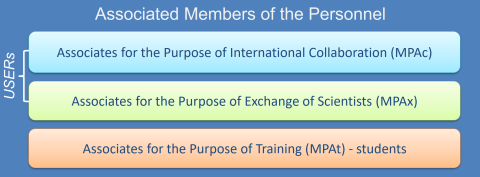
Associat Members of personnel (MPA) for the purpose of international collaboration and scientific exchange are undoubtedly at the core of CERN’s scientific success. 2,900 of them, referred to as users for simplicity, were invited to share their perspective on their financial situation, working conditions and recognition. We gathered 361 responses, a 12% response rate, and in this article, we present the concerns they emphasised most
Financial situation of Users
Respondents are experienced, long-standing collaborators: more than 64% have been associated with CERN for over five years. Despite this commitment, only 55% report a generally positive financial situation, while 19% are unable to cover their basic needs.
Only 48% of respondents receive a Cost-of-Living Allowance (COLA) through CERN, the rest receiving a subsistence from CERN or only relying on direct payments from their home institute. CERN therefore has no way of assessing whether what users receive is enough to live on in the Geneva area. The COLA itself is a problem as well: 65% of respondents believe the current compensation is insufficient to attract talent to CERN, and they consistently pointed to a lack of transparency, administrative complexity and insufficient institutional support on taxation.
Problems related to social protection
The Handbook on key legal responsibilities of scientific institutions in respect of their personnel at CERN 1 states that a user's home institution must ensure that its employee is covered by social and health insurance adequate in both Switzerland and France. Following our Staff Rules and Regulations (SRR), the Home Institute Declaration (HID), signed before a user's contract begins, reinforce this: "the candidate's social insurance cover is the responsibility of the home institution". However, it adds a caveat, also from the SRR: "if, for any reason, the home institution is unable to provide such health and accident insurance, it must be obtained by the candidate".
That caveat protects CERN legally, but in practice it shifts the insurance cost (in the region) onto the individual, without ensuring proper compensation. The survey shows how far: 54% of respondents pay for their insurance scheme themselves, and only 36% of all respondents have cover that includes the consequences of occupational accidents and illness. The pension picture is also alarming: only 33% contribute to a pension
scheme. Is this how CERN should take care of the people whose work secures the success and prestige of the organisation? The Staff Association believes it is not. A mechanism should exist to ensure that any additional insurance cost in the region born by the individual is entirely compensated by the user's home institute.
Seen against this background, it is no surprise that 58% of respondents consider that the package CERN offers to users is not sufficient to avoid financial stress and ensure a decent standard of living.
The survey also raised perceived structural inequality between users and employed members of personnel, a lack of recognition, and the absence of any systematic family support for the user community. We will come back to these topics in future communications, as the story of users' problems should be told loudly and continuously.
Detailed reports on this survey, in French, are available at the Staff Association Secretariat; abridged versions in English are also available. We are drafting proposals to address the issues raised by the survey which we will present to management. We will keep you updated.